
Can Strength Training Burn Fat?
August 13, 2026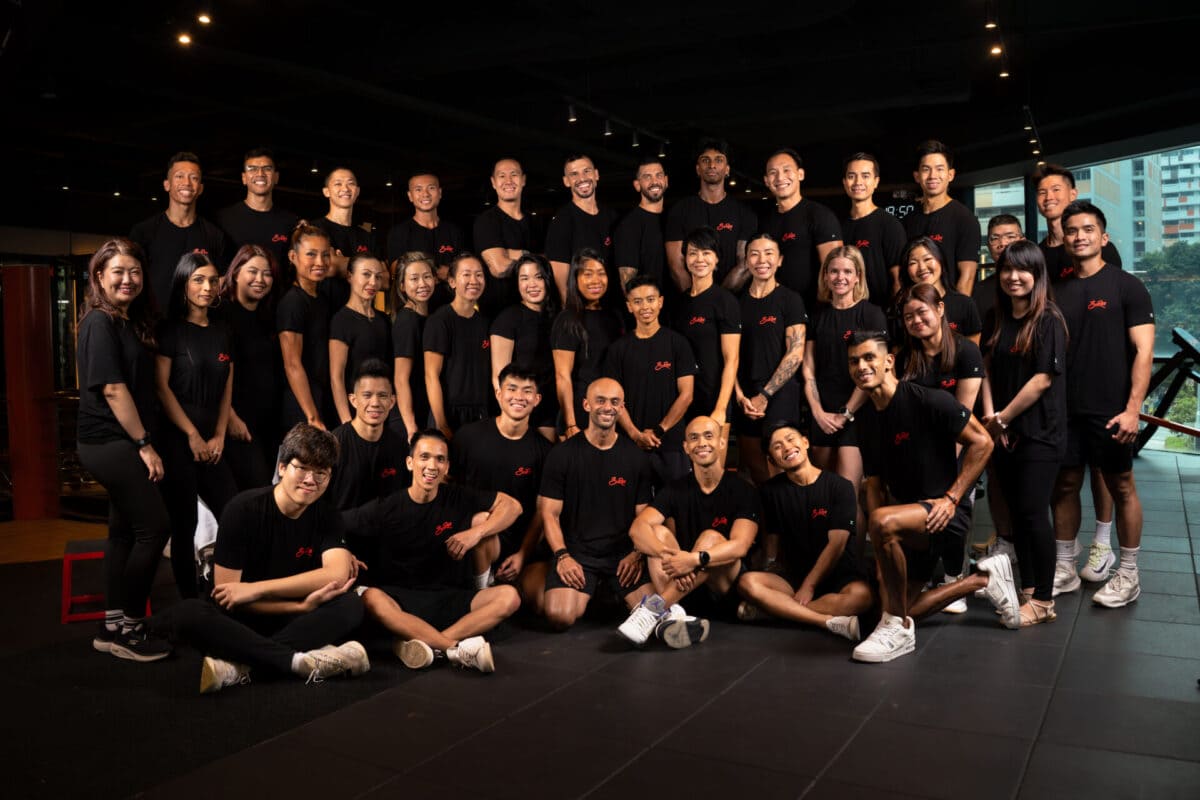
Thinking about getting a personal trainer in Singapore? One of the first questions you'll probably have is: how much does personal training actually cost?
Personal training in Singapore typically costs S$60 to S$350 per session as of 2026, with most experienced coaches charging S$120 to S$200. If you're thinking about getting a personal trainer, cost is probably one of the first questions you'll have. The range is wide, and the price can vary depending on where you train, who you train with and, importantly, what is included in the experience.
A lower price doesn't necessarily mean you're getting less, just as a higher price doesn't automatically mean a better experience. The type of training, level of personalization, trainer experience, facilities and overall approach can all affect what you pay.
So, if you're comparing personal training options in Singapore, it helps to understand what you're actually paying for rather than looking at the session price alone. In this guide, we'll break down the typical costs, what can affect the price and what to look out for, so you can compare your options and make a more informed decision about what's right for you.
Key Points
- Personal training in Singapore ranges from around S$60 to S$350 per session, with most experienced coaches landing between S$120 and S$200.
- The type of provider explains most of the difference. A condo trainer, a gym floor trainer and a private studio offer different things at different prices.
- Rates vary between providers, so it's always worth confirming current pricing directly with anyone you're considering.
- Packages usually bring the per-session rate down by 10 to 20 percent in exchange for committing upfront.
- What matters most is finding something you'll enjoy and keep doing. Consistency is what turns the spend into results.
Personal Training Prices in Singapore by Type of Gym
Most of the price difference comes down to what kind of setup you're choosing. Here is roughly where things sit, and who each option tends to suit.
- Semi-private or small group, around S$30 to S$80 per person. Two to four people share a coach. The most affordable way in, and a good fit if you already know the movements and mainly want structure and a bit of company.
- Commercial gym trainers, around S$80 to S$140. Trainers working on the floor at a larger chain gym, usually with a membership on top. Worth meeting the specific coach you would be working with, since experience varies between individuals.
- Condo and mobile trainers, around S$70 to S$180. The trainer comes to you, which is wonderfully convenient and means no facility fee. Just check what equipment your building has, as that shapes what you can do.
- Boutique studios, around S$120 to S$160. Certified coaches in a dedicated studio with proper equipment, usually with structured programming behind the sessions.
- Private one-to-one studios, around S$160 to S$350. Appointment-only private spaces with dedicated one-to-one coaching. The rate typically includes assessment, programming and ongoing progress reviews alongside the sessions themselves.
Training twice a week (about eight sessions a month), that works out to roughly S$250 to S$650 a month for semi-private training, S$650 to S$1,100 with a commercial gym trainer, and S$1,300 to S$2,800 at a private one-to-one studio. Useful to know early on, so you can focus your search on the range that fits comfortably.
These are typical ranges to help you narrow your search. Rates differ between providers and change over time, so it's always worth confirming current pricing directly.
Takeaway: In Singapore, semi-private sits around S$30 to S$80 per person, gym floor trainers S$80 to S$140, condo and mobile trainers S$70 to S$180, boutique studios S$120 to S$160, and private one-to-one studios S$160 to S$350.
What Affects Personal Training Pricing
Once you know the tiers, a few other things explain the remaining differences.
- Experience and qualifications. A newly certified coach generally charges differently from someone with years of clients and ongoing education behind them.
- One-to-one or shared. Sharing a coach brings the cost per person down, with proportionally less individual attention.
- The space. A private studio carries rent and equipment costs that a mobile trainer doesn't, and that's reflected in the rate.
- What comes with the hour. This is the one most people don't think to ask about. Some rates include an assessment, a written program, progress reviews and nutrition support. Others cover the session itself.
- Package size. Larger blocks usually bring the per-session rate down, commonly by 10 to 20 percent.
Specialization. Coaches experienced with injuries, pre and postnatal clients, or older adults often price differently, which makes sense given the extra training involved.
So when you compare S$90 with S$220, you may well be comparing two different offerings rather than the same thing at two prices. Both can be good choices, depending on what you're after.
Takeaway: Experience, format, the space, what's included beyond the hour, package size and specialization explain most of the remaining price differences.
Why Personal Training May Be Worth the Cost
It helps to look at the monthly figure rather than the session rate. At S$150 a session, twice a week, you're looking at around S$1,200 a month. That's a meaningful amount, so it's fair to ask what you get for it.
The short answer is that you're not really buying a series of workouts. You're buying the strength and health you carry into the next few decades, and someone to make sure you build it properly.
The long-term health case
Strength training is one of the more valuable things you can do for your long-term health, and the benefits compound quietly over years.
- You naturally lose muscle as you age. Harvard Health reports that adults can lose as much as 3 to 5 percent of their muscle per decade after 30, and the process tends to speed up with age. Strength training is one of the most effective ways to slow it.
- Strength tracks closely with healthy aging. A study of more than 500,000 people in the UK Biobank found greater strength was associated with better long-term health outcomes, including for heart and respiratory health, and a meta-analysis pooling data from more than three million people across 48 studies reached a similar conclusion.
- It supports bone density, which matters increasingly as you get older, and it helps you stay steady on your feet and independent in later life.
- It's recommended public health guidance. In Singapore, the Health Promotion Board's Physical Activity Guidelines recommend adults strengthen their muscles at least twice a week, with older adults adding strength and balance work on three or more days.
Viewed that way, the monthly figure sits alongside other things you already invest in for your health and future. The difference is that strength is one of the few things you can actively build rather than simply maintain.
What a good coach adds
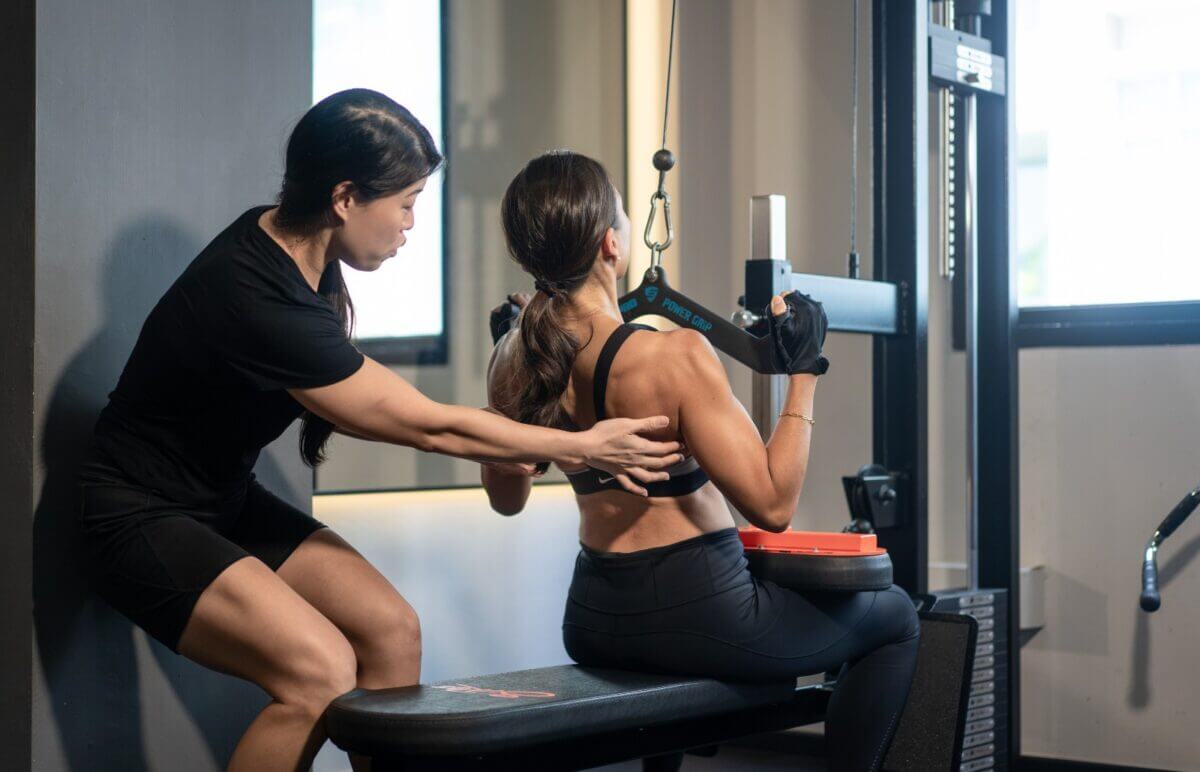
You can pursue all of that on your own, and plenty of people do. What a coach mainly adds is making sure your time and money actually turn into results, and that you get there without picking up setbacks along the way.
- A starting point that suits you. Rather than copying a routine from YouTube and hoping it fits, you start with an assessment of how you actually move, which means the training is built around your body, your history and your goals from day one.
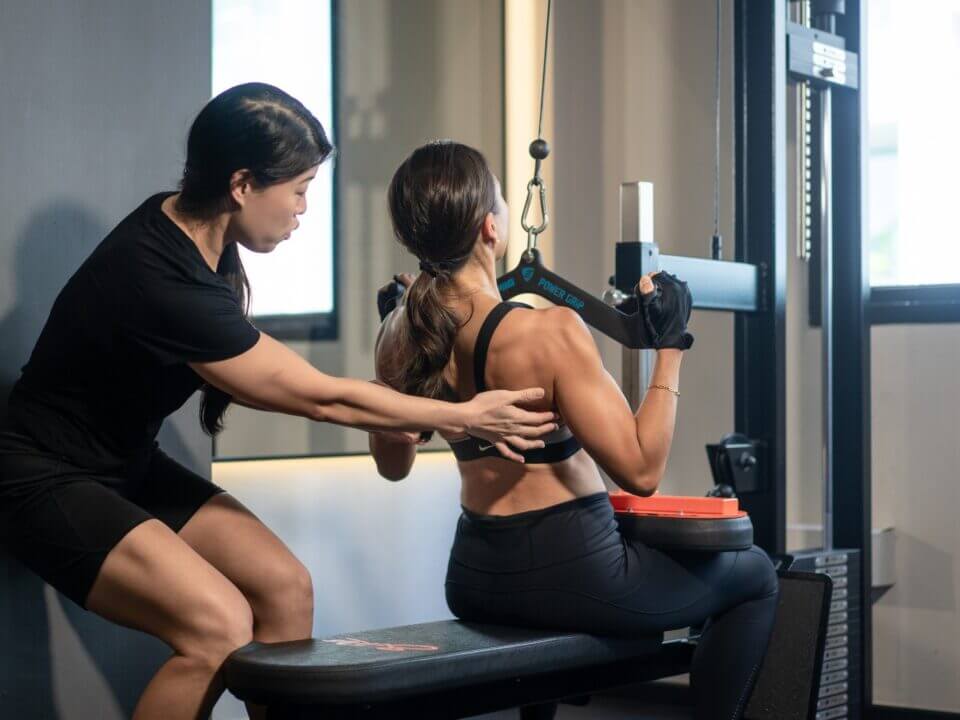
- Training that's safe for your body. This is the one people underestimate. A coach watches your technique rep by rep, spots the compensations you can't see yourself, and adjusts the exercise if something isn't right for your shoulder or your knee. It's a lot easier to learn a movement properly than to undo months of doing it badly.
- A plan that keeps moving. Most people plateau because they do the same thing at the same weight for months. A coach progresses your training deliberately, so you keep getting results rather than stalling at a comfortable level.
- Nutrition guidance that fits your life. Not a meal plan you abandon after two weeks, but practical advice on how to eat for your goals around hawker lunches, family dinners and a busy work schedule.
- Support with sleep, stress and daily activity. These shape your results as much as the training does. Poor sleep and high stress affect recovery, energy and progress, so a good coach pays attention to them rather than treating the hour in the gym in isolation.
- Advice that's specific to you. This is the biggest difference. General fitness advice is everywhere and most of it's fine, but none of it knows about your old knee injury, your travel schedule or the fact that you hate mornings. A coach does, and adjusts accordingly.
- Someone in your corner. When work gets busy or motivation dips, having an appointment and a person expecting you is often what keeps the habit going.
It tends to be especially valuable if you're new to strength training, returning after a break, training around an injury with your doctor's clearance, or if you would simply find it easier to stay consistent with support. That last one is far more common than people realize, and it's not a reflection on you.
The most useful way to think about it: most people don't stop training because the program was wrong. They stop because life got busy, progress stalled, or they were not sure what to do next. Good coaching is largely about making sure none of those becomes the reason you stop.
Takeaway: Strength training supports muscle, bone and long-term health as you age, and a good coach helps make sure your time and money turn into lasting results rather than a few months of guesswork.
What SURGE Offers
Surge Strength & Results is a private one-to-one personal training gym with studios in Tanjong Pagar, New Bahru (Robertson Quay) and Katong. Pricing depends on package size and how often you train, and is worked out at consultation.
What you get for it is more concrete.
A private studio, not a crowded gym floor
Every session happens in a private studio. There's no queuing for a squat rack, no waiting out someone's phone break between sets, and no training with an audience. For anyone who's felt self-conscious in a busy commercial gym, or simply lost half a session waiting for equipment, this changes the experience completely. You turn up, your coach is ready, and the hour is yours.
The studios are fitted with quality, well-maintained equipment across the full range you'd need for proper strength work, so your program is built around what's best for you rather than around what happens to be free.
A coach matched to you
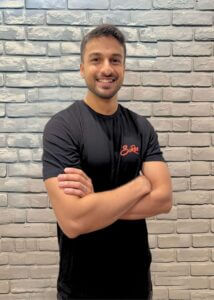
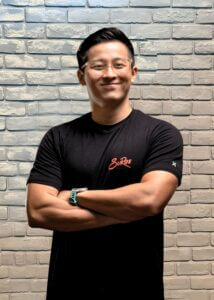
You're matched with a certified personal trainer based on your goals and health needs, rather than whoever happens to be on shift. If you're training around a knee issue, returning after years away, or working toward something specific, you're working with someone whose experience fits that.
Everything in one app
Your training lives in a single app, so you're never guessing between sessions. You can see your program and exercises, follow your nutrition plan, and track your progress over time in one place.
That last part matters more than people expect. Progress in strength training is gradual, and it's easy to miss how far you've come when you're in the middle of it. Seeing the numbers move is often what keeps people going through the less exciting months.
Support beyond the hour
Training is one hour. The other 167 in your week shape your results just as much, which is why coaching extends past the session itself:
- Nutrition guidance built around how you actually eat
- Lifestyle coaching on sleep, stress and daily activity, since these drive recovery and progress
- Regular body composition and movement assessments, so you can see what's changing and the plan can adapt
How payment works
- No fixed-term contract and no auto-deduction
- Larger packages can be split into up to three interest-free payments
- Packages can be paused case by case, for example for medical reasons
Those terms are worth noting when you're comparing options, since they give you flexibility if your circumstances change.
Whatever you end up choosing, this is the level of detail worth asking about. A rate that includes assessment, programming, nutrition support and ongoing review is a different proposition from one that covers the hour alone, even when the per-session numbers look similar.
Takeaway: Surge offers one-to-one coaching in private studios, a coach matched to your goals, an app for your program and progress, nutrition and lifestyle coaching, and regular assessments, with no fixed-term contract.
How to Get the Most Value for Your Money
Whichever option you choose, these five things will tell you most of what you need to know.
- Ask what's included beyond the session itself. Assessment, programming, progress reviews, nutrition support. This is where similar-looking prices often differ.
- Check the trainer's certifications and experience with goals like yours. A coach who is excellent with athletes may be a different fit from one who regularly works with beginners or around injuries.
- Choose a package size you can keep up with. Two sessions a week is a common starting point, and a size you'll comfortably use is better value than a bigger block.
- Read recent Google reviews, not just testimonials on the gym's own site. Independent reviews give you a helpful sense of how things are going currently.
- Book a consultation before committing to a large package. Use it to talk through your goals, see the space and ask how coaches are matched to clients, since you'll be training with that coach regularly.
One last thought: work out the monthly total at the frequency you realistically expect to train, rather than focusing on the per-session rate. Something you enjoy and keep doing will always give you better value than a cheaper option that doesn't quite fit.
Takeaway: Ask what's included, check relevant experience, choose a package you'll comfortably use, read recent independent reviews, and meet the coach before committing.
If you would like to talk through what training would actually involve for you, and what it would cost based on the frequency and package that suit your goals, you can book a complimentary consultation with SURGE. It's a conversation, not a commitment, and a good opportunity to work through the checklist above.
Frequently Asked Questions
How much does a personal trainer cost in Singapore per session? Personal training in Singapore typically costs between S$60 and S$350 per session, with most experienced coaches landing between S$120 and S$200. Semi-private and entry-level options sit lower, and premium private studios higher. Rates vary between providers, so it's worth confirming current pricing directly.
How much does personal training cost per month in Singapore? It depends on frequency?Training twice a week works out to roughly S$250 to S$650 a month for semi-private training, S$650 to S$1,100 with a commercial gym trainer, and S$1,300 to S$2,800 at a private one-to-one studio. Training once a week costs proportionally less. Working out your monthly total is far more useful than comparing per-session rates.
Do personal training packages save money? Usually, yes. Published guides suggest packages typically reduce the per-session rate by around 10 to 20 percent compared with paying session by session. The trade-off is paying upfront and committing to one provider, so it's worth checking expiry, freezing and transfer terms first.
Why do personal trainers charge such different rates? Rates vary based on the coach's experience and qualifications, whether sessions are one-to-one or shared, the setting and its overheads, what's included beyond the session, and package length. A large price gap often reflects genuinely different services rather than the same service priced differently.
Is a more expensive personal trainer better? Not necessarily. Price reflects experience, setting and what's included, but it's not a reliable measure of quality on its own. What matters more is whether the coaching suits your goals, whether the coach has relevant experience, and whether it's something you'll realistically keep doing.
Is personal training worth the cost? That depends on your goals and circumstances. Personal training tends to be most helpful for people who want structured guidance, are new to training, are working around an injury or health condition with their doctor's clearance, or would simply find it easier to stay consistent with support. The value builds over time, so finding something you'll keep doing matters as much as the rate.
How much does personal training cost at Surge? Pricing at Surge depends on package size and how often you train. Packages come in 10, 20 or 50 sessions, with no fixed-term contract, and larger packages can be split into up to three interest-free payments. Your exact price is worked out at a free consultation.
Where are Surge's personal training studios?Surge has private studios in Tanjong Pagar, New Bahru (Robertson Quay) and Katong.
Understanding what personal training costs in Singapore is a good place to start. From there, it's really about finding the setup that fits your goals, your budget and your week, because that's what makes it easy to keep going. Take your time, ask plenty of questions, and you'll find the right fit.
References
- Preserve your muscle mass (age-related muscle loss of roughly 3 to 5 percent per decade after age 30). Harvard Health Publishing. https://www.health.harvard.edu/staying-healthy/preserve-your-muscle-mass
- Grip strength and long-term health outcomes (UK Biobank prospective cohort of approximately 500,000 participants). PMC. https://www.ncbi.nlm.nih.gov/pmc/articles/PMC5136688/
- Muscular strength and long-term health outcomes: meta-analysis pooling data from approximately two million adults. Age and Ageing (Oxford Academic). https://academic.oup.com/ageing/article/51/5/afac117/6593705
- Health Promotion Board (HPB) and Sport Singapore. Singapore Physical Activity Guidelines (muscle-strengthening at least twice a week for adults; strength and balance three or more days a week for older adults). https://www.hpb.gov.sg/newsroom/article/singapore-s-physical-activity-guidelines-revised-to-tackle-sedentarism-and-promote-variation-in-physical-activity
This content is for general informational purposes only and does not constitute personalized medical, fitness, or nutrition advice. Always consult a qualified professional before making changes to your training, nutrition, or health routine.